One arch, built together.
Two days off-site that align the CEO and direct reports on where the business is going, who decides what and how the team works. Then 90 days to make it hold.
Sound familiar?
- Ask each executive for the strategy, and you get a different answer from each.
- Everything is a priority, so every function picks its own.
- The same decision gets made twice, or waits for weeks because no one knows whose it is.
- The executive meeting reports on functions. The real issues are settled elsewhere.
- Your managers hear different messages from different members of the top team.
Not a strategy off-site. Not team building.
No slide marathon, no games. Two days of real decisions on your own strategy, your own recurring decisions and your own calendar. For the CEO and direct reports, up to 12 people. For the teams below the top team, we run One Team.
By the end of day 2, your top team has
Cornerstones
3 to 5 priorities, each owned.
Trade-offs
"X even over Y", in writing.
Decision rights
Who decides what.
A rhythm
Which meetings, for what.
The keystone
A one-page charter, signed by all.
90-day commitments
From every member of the team.
Survey it. Build it. Load it.
Survey it
- A site visit with the CEO
- An alignment survey of the top team
- Confidential one-to-ones with every member
- A CEO pre-brief on the scores and themes
Reality and direction
- Survey results on the wall
- The strategy in one 35-word sentence
- Cornerstones and written trade-offs
- A hosted dinner
Agreements and commitment
- The top team's own job
- Who decides what; meetings and agreements
- The charter, signed
- 90-day commitments
Make it hold
- One briefing for every leader's team
- Check-ins at days 30 and 60
- The survey again at day 90
What makes it different
Built in order
Where we stand, what we span, how the stones fit, then the keystone. No charter before the team has seen where it disagrees.
Write first, talk second
Everyone writes alone before anyone speaks, so rank and volume don't set the answer.
Measured before and after
The survey runs before the retreat and again at day 90, so you see where alignment moved.
Your real decisions
Your strategy, your recurring decisions and your meeting calendar. No role play, no case studies.
The CEO speaks last
The CEO sets out why now, then writes with everyone else and speaks after them.
Visual facilitation
Bikablo-certified facilitation: every agreement is drawn on the wall and carried out of the room.
What it takes
- Who
- The CEO and all direct reports, up to 12 people
- In the room
- Two full days and a dinner
- Before
- A site visit with the CEO, a short survey and a confidential one-to-one with every member
- After
- Check-ins at days 30 and 60, and the survey again at day 90
- Venue
- Off-site, with a night's stay if possible
- Language
- English, Arabic or both
- Scope and investment are agreed in the 45-minute Top-Team Conversation.
Questions leaders ask
How is this different from a strategy off-site?
It is built around three agreements, not presentations: direction (cornerstones and trade-offs), decision rights, and how the team works. You leave with a signed one-page charter and 90-day commitments.
Who should attend?
The CEO and every direct report, up to 12 people. For teams below the top team, One Team is the better fit.
Is there follow-up?
Yes. Check-ins at days 30 and 60, and the alignment survey again at day 90, so you can see what moved.
Can it run in Arabic?
Yes: English, Arabic or both.
Is Leadership Retreat right for your team?
45 minutes is enough to find out. No pitch, no obligation.
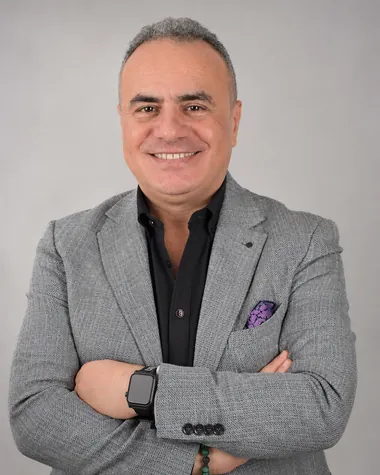
Your facilitator: Ayman Mahana
About 25 years in senior HR and leadership roles. Certified in Playing to Win, MBTI, Social Style and Bikablo visual facilitation. More
Program design and tools: Focal Point. Draws, with credit, on published work by Collis and Rukstad, Lafley and Martin, Wageman and colleagues, Rogers and Blenko, Toegel and Barsoux, Lencioni, and Klein. Part of Team Alignment.