Five camps, climbed together.
Two days that turn a group of capable people into a team that trusts, argues well, decides, holds each other to it and wins together. Then 90 days to make it stick.
Sound familiar?
- Meetings are polite. The real debate happens in the corridor afterwards.
- Decisions get reopened a week later, or quietly ignored.
- People protect their own department's numbers before the team's.
- Only the boss holds anyone to account. Peers stay silent.
- Nobody admits a mistake until it is too late to fix it.
Not a team-building day
No ropes course, no trust falls. One Team is serious work on how your team decides and delivers, built on Patrick Lencioni's Five Dysfunctions of a Team model. For any intact team of 3 to 12 people who share goals and a result.
By the end of day 2, your team has
Rules for how we argue
Written by the team, in its own words.
One goal
A rallying goal for the next 3–9 months.
Every next step
Each member's commitment, heard by all.
A scoreboard
The team result: red, yellow, green.
A team agreement
One page, signed by all.
Climb it. Rope it. Keep it.
Is this team ready?
- A call with the team leader
- A go, wait or redesign check
- A team survey on the five behaviors
- Confidential one-to-ones; MBTI and pre-work
Trust and conflict
- Personal stories
- An MBTI map of the team
- Strengths and weaknesses, shared
- Practice on a live issue
Commitment to results
- One rallying goal
- Peer feedback
- The team scoreboard
- The signed team agreement
Is it sticking?
- A briefing for each member's own team
- Check-ins at days 30 and 60
- The team survey again at day 90
What makes it different
One climb, in order
Trust, then conflict, then commitment, accountability and results. Each camp rests on the one below, so we never skip one.
Real profiles, not guesswork
MBTI, run by a certified practitioner, gives the team a shared language for how each person works and argues.
Measured before and after
The team survey runs before the workshop and again at day 90. You see where the team moved.
Your real issues on the table
We practise conflict on a live issue and set a goal from your real work. No role play, no outdoor games.
The leader goes first
In every exercise that asks for openness, the team leader leads by example. That is what makes it safe.
Visual facilitation
Bikablo-certified facilitation: every agreement is drawn on the wall and carried out of the room.
What it takes
- Who
- The whole team and its leader, 3 to 12 people. Everyone, both days
- Time
- Two full days; a 20-minute talk and two surveys before; check-ins after
- Timing
- The team has worked together for 6–8 weeks or more, and no one is about to leave
- Venue
- Off-site if possible. One room with wall space, away from daily work
- Language
- English, Arabic or both
- Scope and investment are agreed in the 45-minute Top-Team Conversation.
Three ways to climb
Base Camp
The preparation and the two days. About 4 weeks.
Full Climb (recommended)
Adds 90 days of follow-through: a tracker, check-ins at days 30 and 60, and the team survey again at day 90. About 16 weeks.
Summit Team
Adds one-to-one coaching for the team leader and a check-in at day 180. About 29 weeks.
Questions leaders ask
Is this a team-building day?
No. There are no outdoor games or trust falls. It is two days of work on how your team decides and delivers, on its real issues.
Which teams is it for?
Any intact team of 3 to 12 people who share goals and a result: an executive team, a leadership team, a project or functional team.
When is the timing wrong?
If the team has worked together for less than 6–8 weeks, or someone is about to leave. We check this with you first, and will tell you if it is not the right time.
Do participants get a personality profile?
Yes. Each member gets an MBTI profile and feedback from a certified practitioner.
Is One Team right for your team?
45 minutes is enough to find out. No pitch, no obligation.
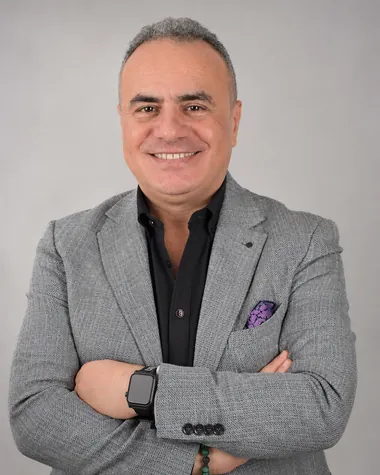
Your facilitator: Ayman Mahana
About 25 years in senior HR and leadership roles. Certified MBTI practitioner and Bikablo visual facilitator; also certified in Social Style, Blue Ocean Strategy, Strategyzer and Playing to Win. More
Built on the Five Dysfunctions of a Team model by Patrick Lencioni (Jossey-Bass, 2002), used with credit. One Team is an independent Focal Point program, not affiliated with The Table Group or Wiley. MBTI is a profile of The Myers-Briggs Company. Part of Team Alignment.